


Top Picks
Buyer's Guide
Replacement Saw Blades Buyer's Guide
A saw handle usually outlasts several blades, so replacing just the blade instead of the whole saw is the cheaper and more sustainable option once a blade dulls or breaks a tooth. This guide covers matching a blade to your exact model, choosing between straight and curved, and fitting it correctly.
Why Buy a Blade Instead of a Whole Saw
A saw handle usually outlasts several blades — the handle stays sound long after the blade has dulled beyond a useful sharpen or snapped a tooth. Replacing just the blade costs a fraction of a new saw and keeps a handle you're already used to, provided you buy the blade matched exactly to your model rather than a generic equivalent.
Matching a Blade to Your Saw Model
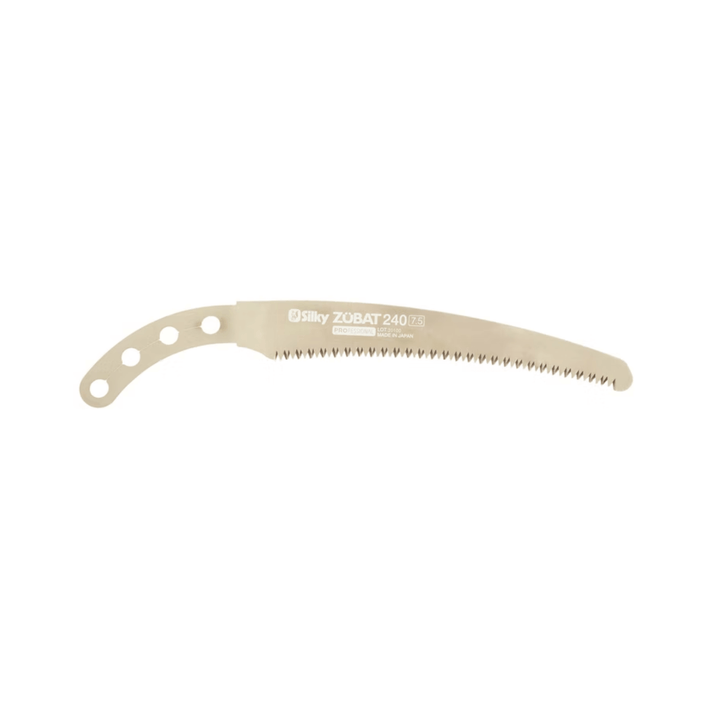
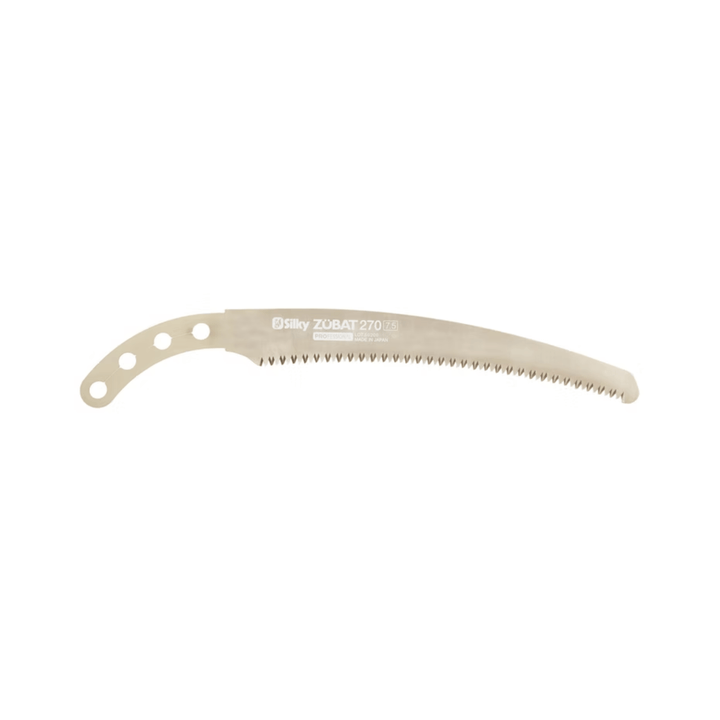
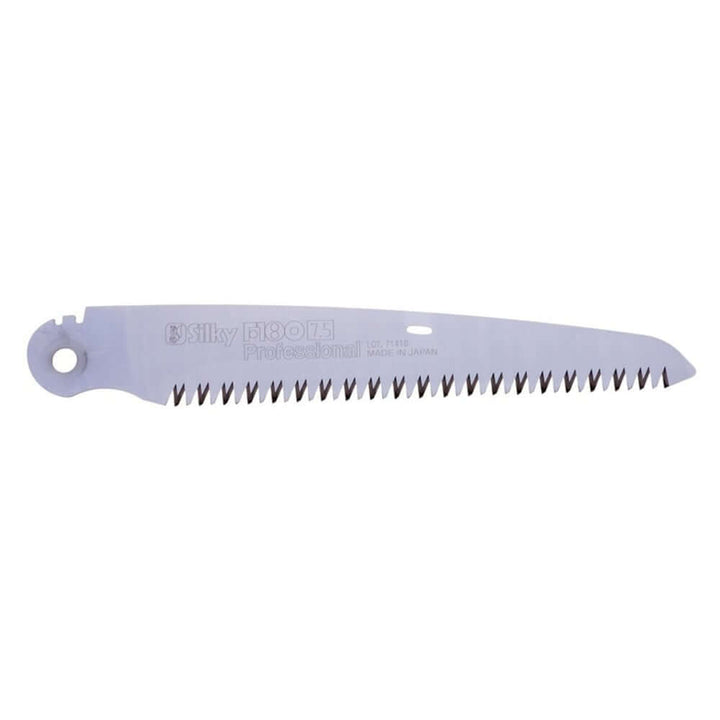
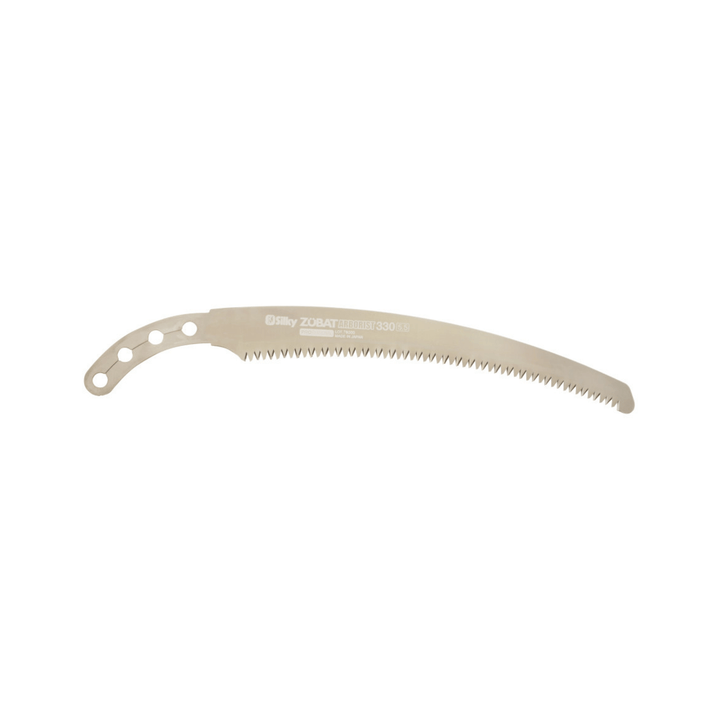
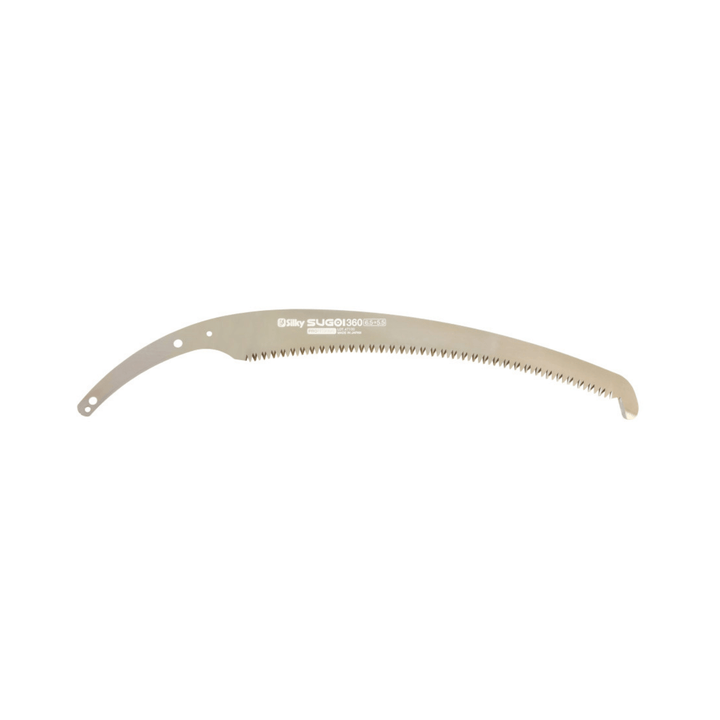
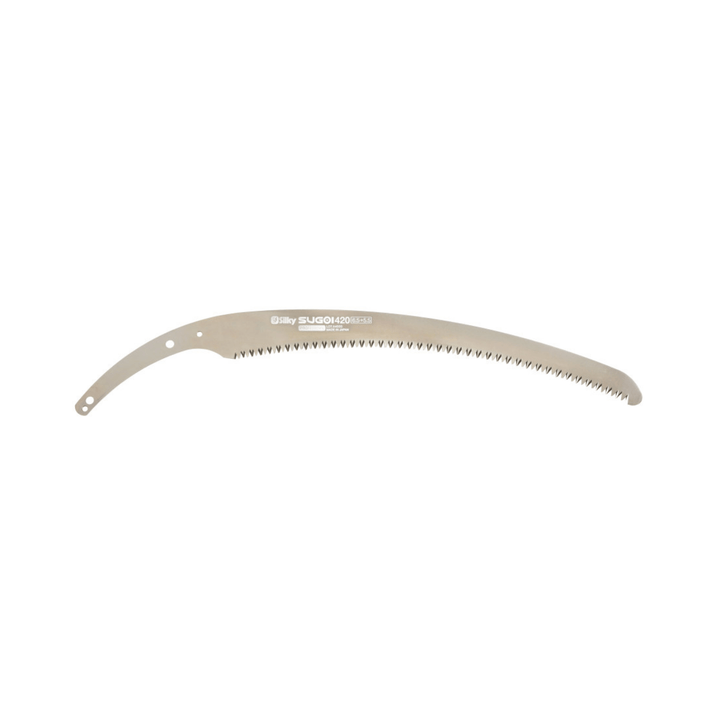
Blades are model-specific, not universal — a Zubat blade fits a Zubat handle, a Gomboy blade fits a Gomboy handle, and the two aren't interchangeable despite both being Silky folding saws. Check your saw's model name (Zubat, Gomboy, Gomtaro, Sugoi, Tsurugi, Natanoko, Katanaboy) and blade length before ordering, since the wrong length or mounting won't fit the handle even from the same brand.
Straight vs Curved Blades
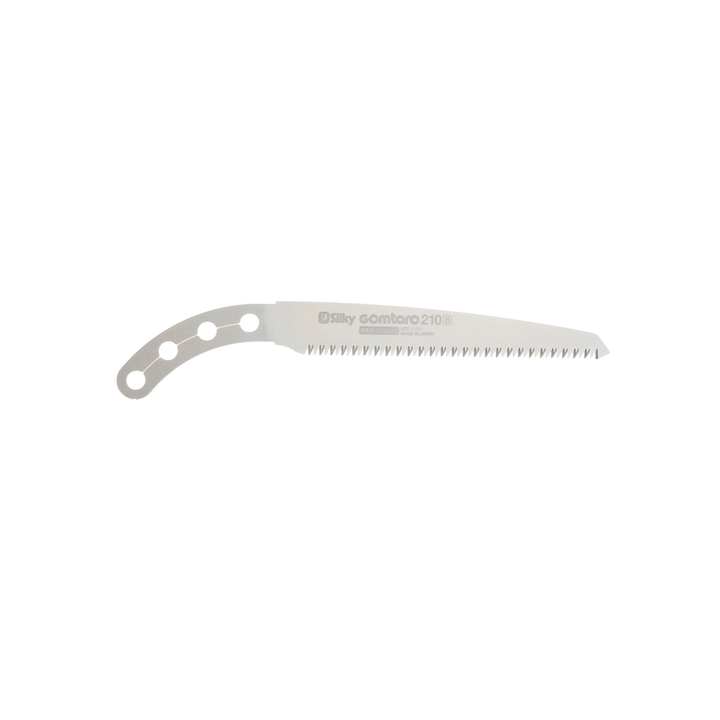
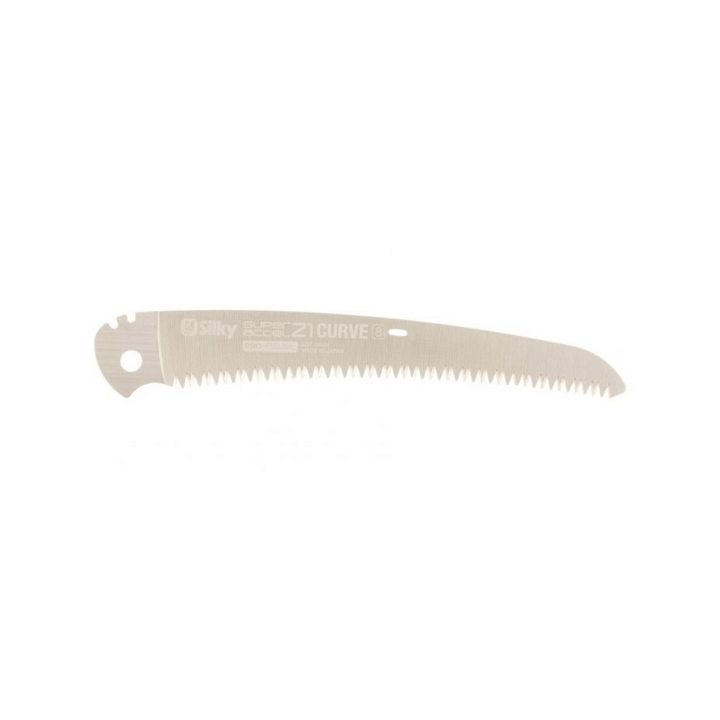
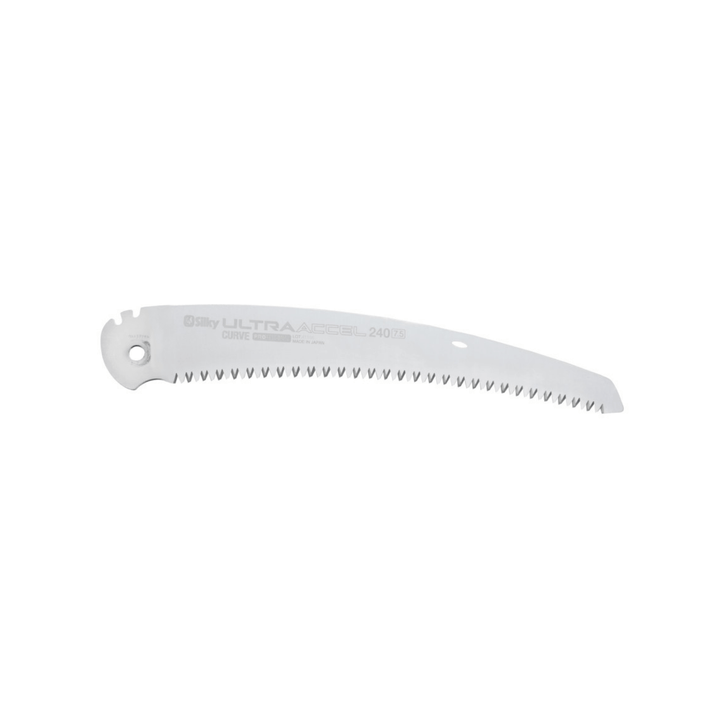
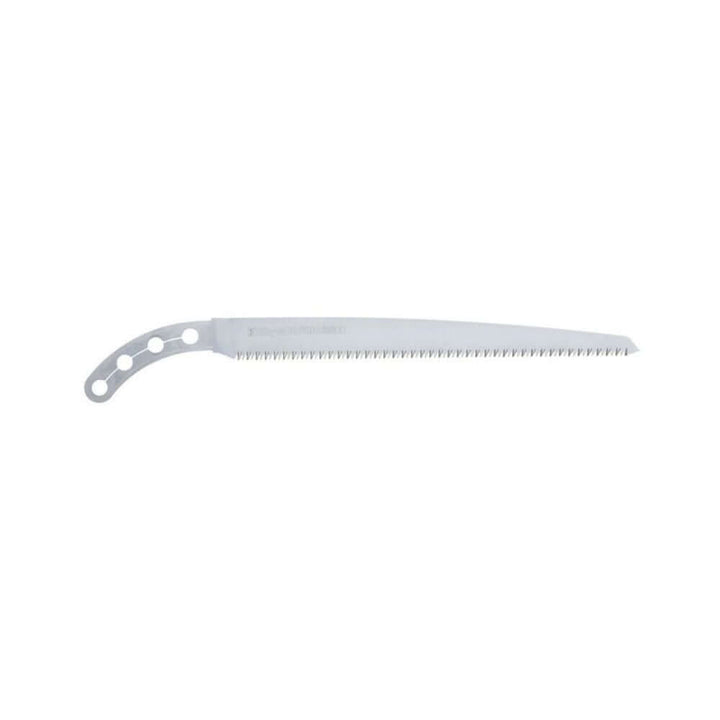
A curved blade concentrates cutting force through the belly of the stroke, making it easier to start a cut and pull through thicker branches with less effort. A straight blade gives more control for precise, flush cuts close to the trunk or a fence line. Most models are available in both, so check which you're replacing rather than assuming the curve matches your original.
Tooth Pattern: General Purpose vs Root-Cutting
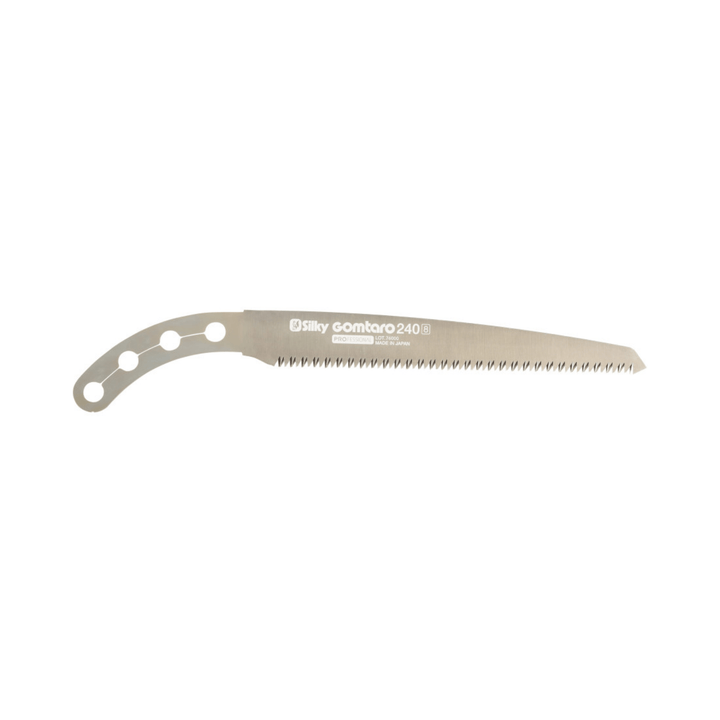
A standard tooth pattern is set up for clean wood, cutting efficiently through branches and trunks above ground. A root-cutting blade like the Gomtaro 240mm uses a different tooth geometry designed to handle the grit and occasional stone contact that comes with cutting at or below soil level, where a standard blade would dull rapidly.
Blade Length & Reach
Shorter blades (210-240mm) are easier to control in tight spaces and among dense branches, while longer blades (300-500mm, like the Katanaboy) clear a thicker cut per stroke and reach further into a cut on larger material. Match length to the branch diameter and clearance you're typically working with, not just to whatever length your current blade happens to be.
Fitting a Replacement Blade
Most folding and fixed pruning saw blades fit via a bolt or pin system at the base of the handle rather than needing tools beyond what comes with the saw. Support the old blade while removing the retaining bolt to avoid it dropping and damaging the edge, and check the new blade seats fully home before tightening — a blade that's not fully seated can work loose under load.
When to Replace vs Sharpen
Silky and most Japanese-pattern saw blades are impulse-hardened, which gives a longer-lasting edge but means they generally aren't designed to be resharpened at home the way a softer steel blade can be. Once teeth are visibly damaged, chipped or the blade is cutting noticeably slower despite being clean and resin-free, replacement is usually the right call rather than attempting to file a hardened tooth pattern back to shape.