


What Can a Pressure Washer Be Used For?
Learn how to safely connect, operate, and get the best results from your STIHL high-pressure cleaner.
Versatile Cleaning Power for Home and Garden
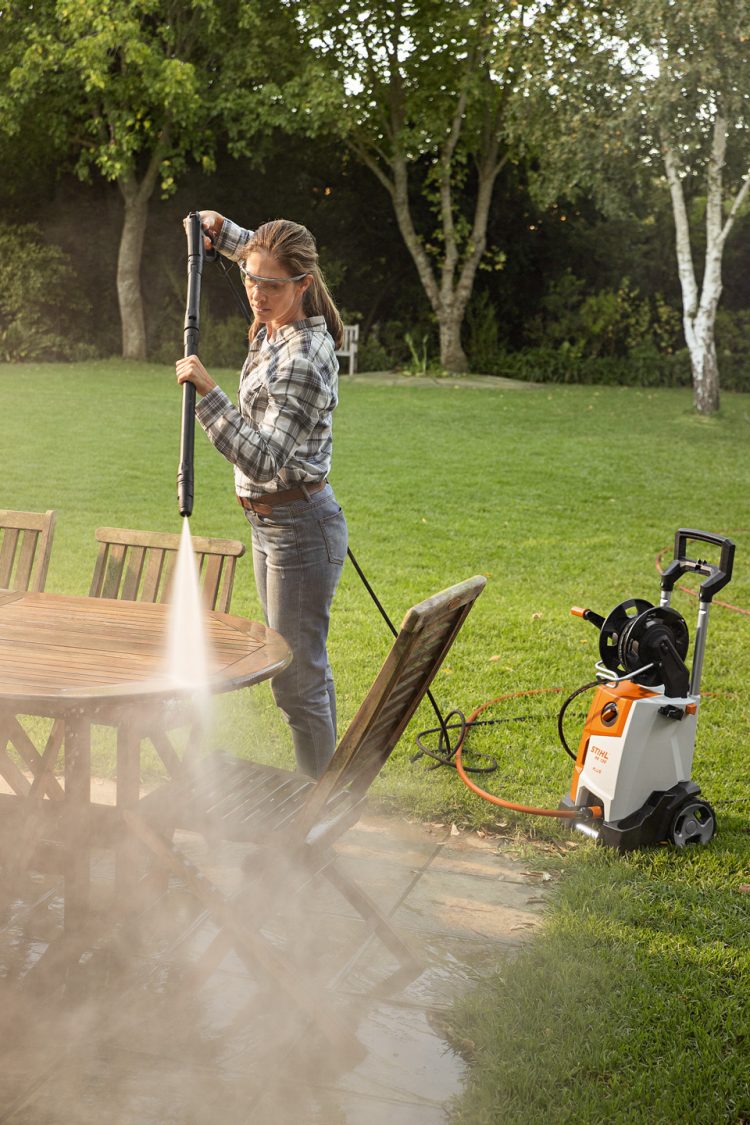
A pressure washer is the ultimate cleaning companion for removing stubborn dirt across your home and garden. Whether it’s refreshing garden furniture, restoring weathered surfaces, or washing vehicles — high water pressure makes the job quick and effective.
STIHL high-pressure cleaners such as the RE 130 PLUS provide consistent cleaning performance and are easy to set up and use.
Connecting Your Pressure Washer Correctly
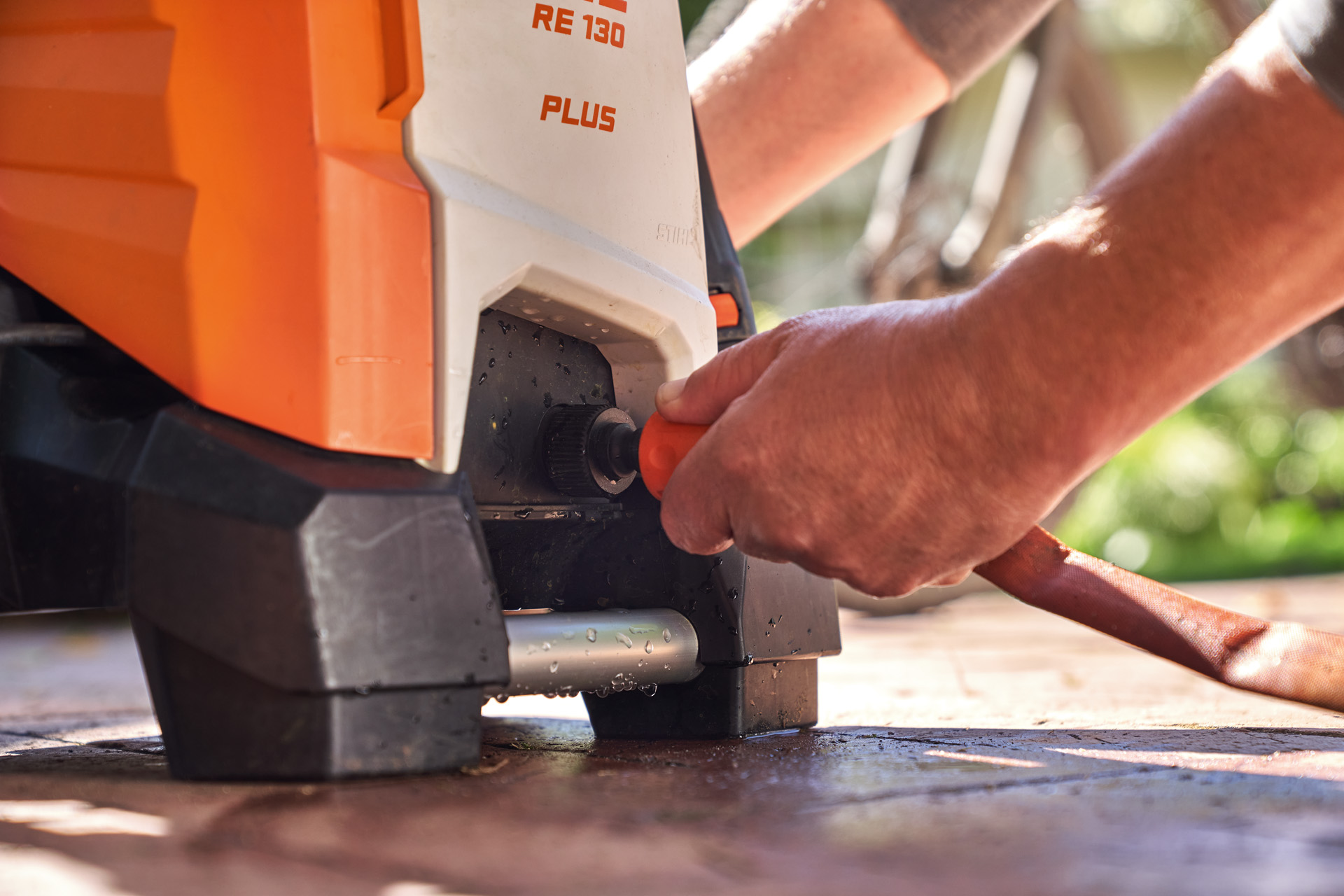
The connection setup depends on your water source — you can use fresh tap water, rainwater, or even water from a garden pump. No matter the source, always ensure that the unit and hose are securely connected before turning on the machine.
The following sections show how to connect your STIHL pressure washer to various water supplies safely.

Connecting to a Standard Tap
When connecting to a household tap, use a garden hose fitted with a backflow preventer. This prevents any water from flowing back into your domestic supply.
- Attach the equipped garden hose to both the tap and the pressure washer.
- Connect the pressure washer to the power supply but leave it switched off.
- Turn on the tap and pull the spray gun trigger — this fills the system with water and removes air.

Connecting to a Garden Pump
If you have a cistern or garden well, you can use a garden pump to supply water. To protect your pressure washer from impurities, always install a water filter between the pump and the washer.
- Attach the water filter to the pump or pressure washer.
- Connect the garden hose and ensure all fittings are watertight.
- Start the pump, then flood the high-pressure system by pulling the trigger before use.

Using Rainwater as a Water Source
A suction kit allows you to use rainwater stored in water butts or tanks. Always use a water filter to prevent debris from entering the system and causing damage.
- Remove the hose coupling and screw on the filter.
- Fully immerse the suction hose in the water source until flooded, then connect to the washer.
- Keep the suction hose tip at least 1 metre above the base of the water butt to avoid drawing in sediment.
Starting the Pressure Washer
Once the system is flooded and air-free, you can mount the correct attachment for your cleaning task. STIHL offers accessories like:
- Wet blasting attachment – for deep cleaning stone and concrete.
- Surface cleaner – for patios and driveways.
- Rotating wash brush – for sensitive surfaces such as façades.
Switch on the pressure washer once everything is connected and you’re ready to begin.

Using Your Pressure Washer Safely
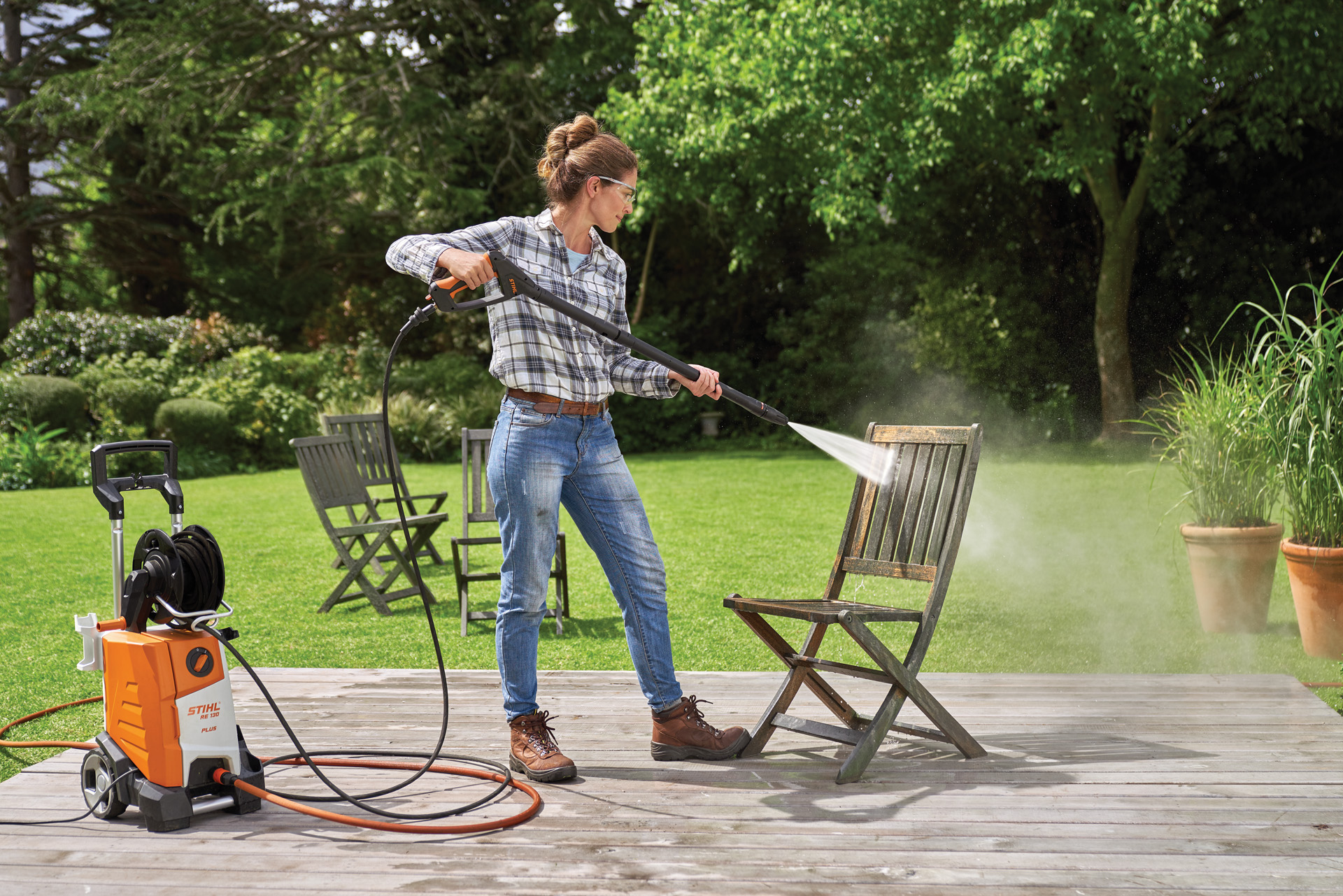
Always start cleaning at low pressure to test how the material reacts. Wooden furniture, for example, is more delicate than metal or stone.
If higher cleaning performance is needed, gradually increase pressure — never start with maximum force. When in doubt, consult the user manual for your specific attachment to ensure correct operation.
Summary: Using a STIHL Pressure Washer
- Pressure washers remove stubborn dirt quickly and effectively.
- Always connect safely, using a backflow preventer and water filter when necessary.
- Suitable water sources include tap water, rainwater, and garden pumps.
- Flood the system with water before switching on.
- Use the correct attachment and adjust pressure for each surface type.
Top STIHL Pressure Washers

STIHL RE 140 PLUS Electric Pressure Washer
Robust electric pressure washer with brushless motor & 10 m steel-reinforced hose. Ideal for large outdoor cleaning jobs.
View Product
STIHL REA 100 PLUS Cordless Pressure Washer
Portable battery-powered washer gives freedom without cables – perfect for patios, vehicles or garden tasks.
View Product
STIHL REA 60 PLUS Cordless Pressure Washer
Compact cordless option great for smaller cleaning tasks around the home or garden. Lightweight and easy to use.
View ProductCart
Your Cart is Empty
お得な情報をお見逃しなく!カートにはまだ何も入っていないかもしれませんが、素敵な商品でいっぱいにできるようお手伝いいたします。
- Choosing a selection results in a full page refresh.