


Overview: Sandblasting Using a Pressure Washer
Learn how to use your STIHL pressure washer for effective wet sandblasting on durable surfaces like metal, stone and concrete.
09.10.2025
What Is Wet Sandblasting?
Wet sandblasting (also known as hydro-sandblasting) is a cleaning technique that combines high-pressure water with abrasive granulate. It’s ideal for restoring durable surfaces such as metal, stone, and concrete.
With a STIHL wet sandblasting kit, you can upgrade your existing pressure washer for this purpose. Always use specialised blasting granulate – never quartz sand, which is banned and poses serious health risks.
Choosing the Right Sandblasting Granulate
The choice of granulate has a major impact on cleaning performance and surface safety. STIHL SB 90 blasting granulate is specially developed for use with STIHL wet sandblasting sets.
- Recommended grain size: 0.2 to 1.0 mm.
- Ready-to-use mixture ensures consistent results and optimal water flow.
- Collect and dispose of used granulate and residue responsibly after cleaning.
Start at a low pressure setting and increase gradually if more cleaning power is required. Excessive pressure may damage the surface being treated.
Applications: Where to Use Wet Sandblasting
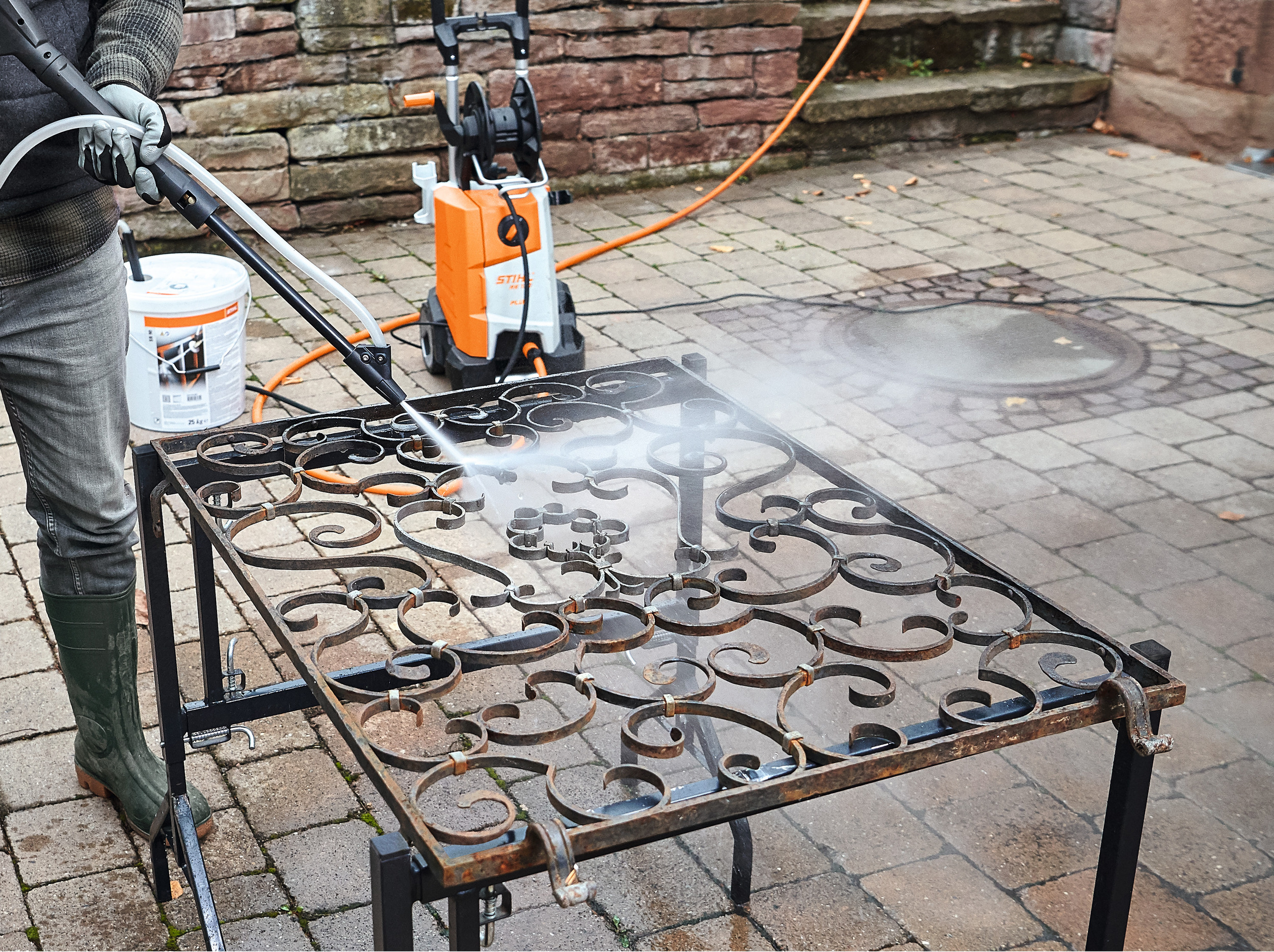
Wet sandblasting works similarly to sandpaper, using water and granulate to remove rust, paint, or dirt from solid materials. It’s particularly effective on uneven or textured surfaces that traditional grinders can’t reach.
- Corrugated metal fences
- Dirty brick or stone masonry
- Heavily rusted metal tools or components
- Concrete or stone steps and garden ornaments
Essential Equipment for Wet Sandblasting
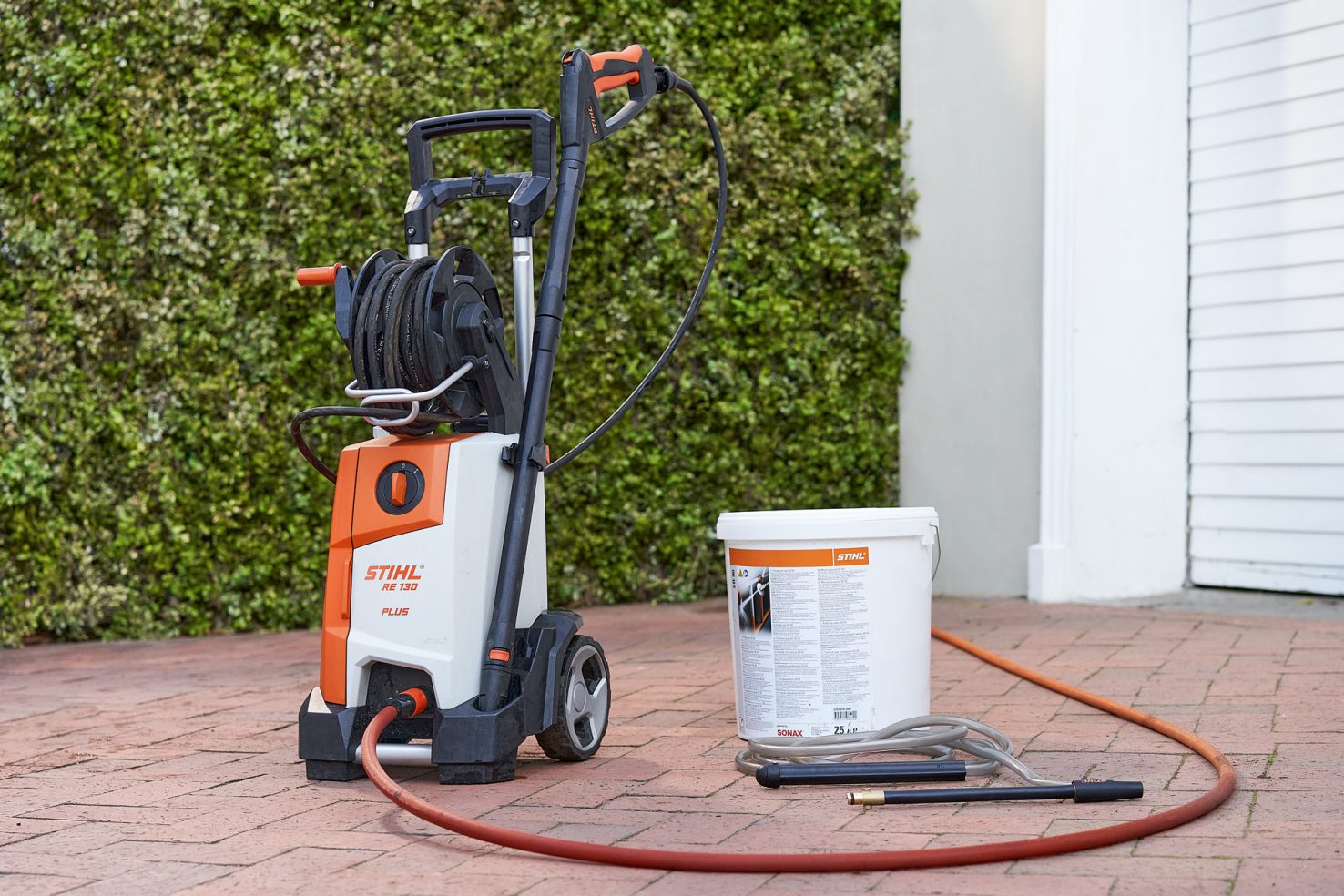
To get started, you’ll need three main components:
- Pressure washer – e.g. STIHL RE 130 PLUS for home and garden.
- Wet sandblasting attachment – connects to the spray lance.
- Blasting granulate – such as STIHL SB 90, silicone-free and iron-enriched.
Recommended Products


How to Use the Wet Sandblasting Kit
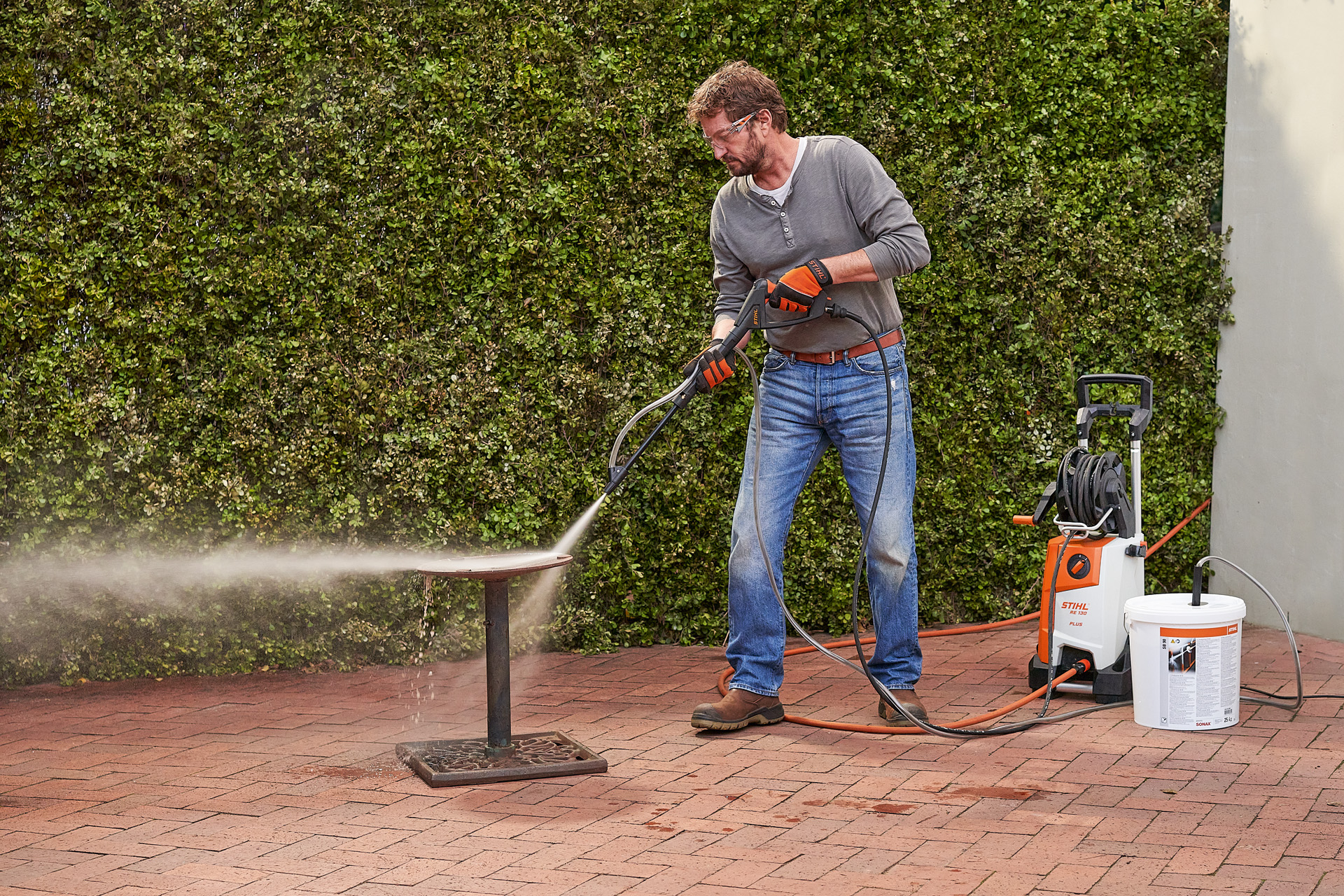
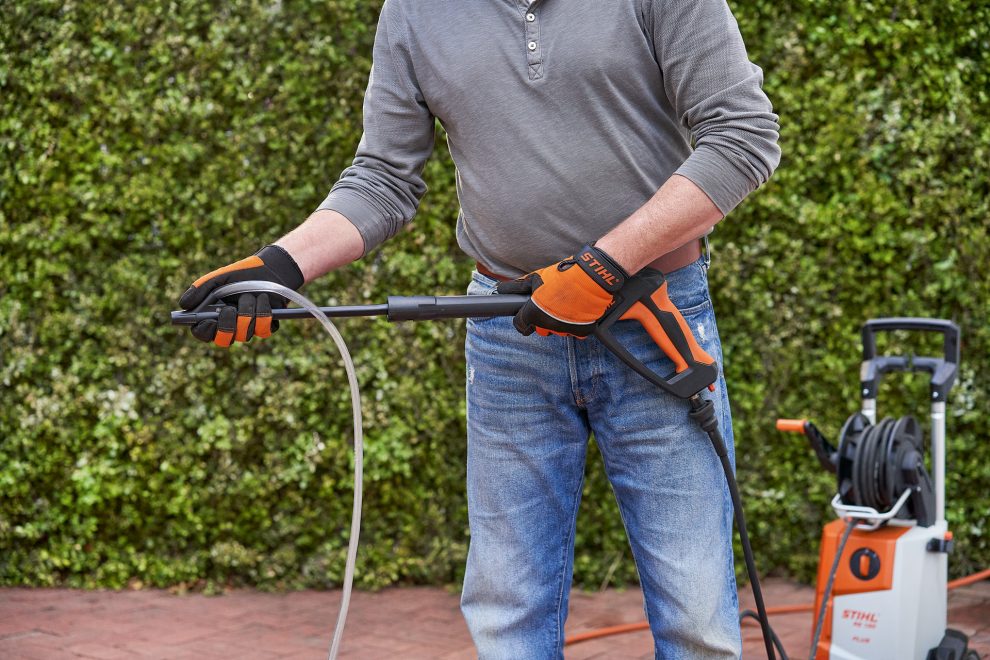
Before starting, prepare your workspace and materials. If cleaning metal fencing, disassemble it where possible and protect surrounding plants or items with a tarpaulin. Always wear appropriate personal protective equipment (PPE) such as gloves, non-slip footwear, and safety glasses.
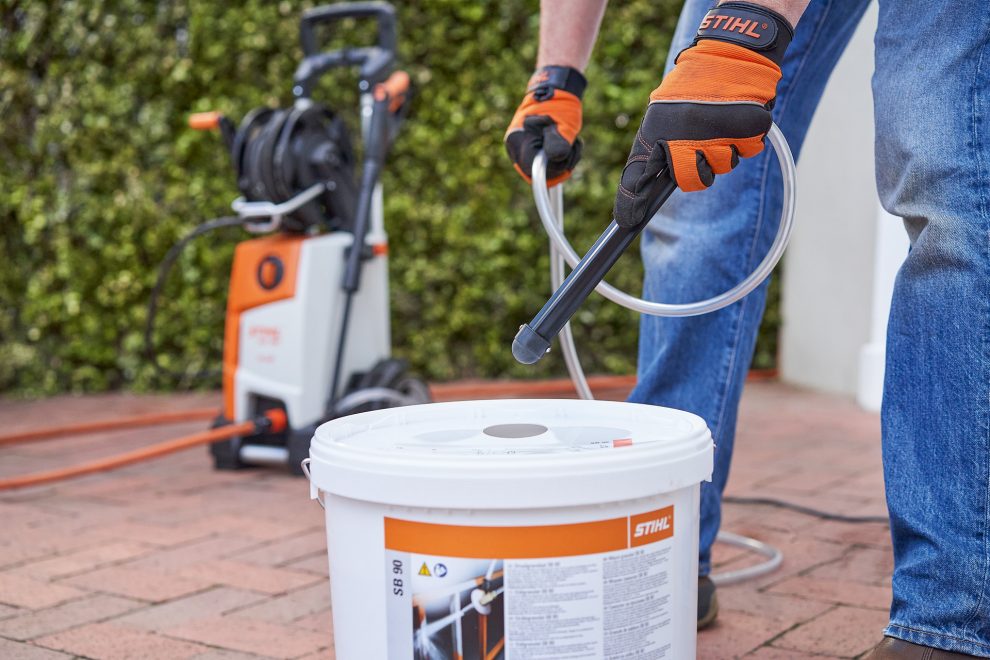
- Set up your pressure washer and fit the wet sandblasting attachment in place of the nozzle.
- Insert the other end of the sandblasting hose into a bucket filled with blasting granulate.
- Ensure the system is flooded with water before starting to prevent air pockets.
Important: Do not use quartz sand. STIHL SB 90 granulate is safe and effective, made from iron-containing aluminosilicate glass and completely silicone-free.
Wet Sandblasting Technique
During sandblasting, maintain a consistent motion and distance. The active cleaning area is about 3 cm in diameter, so move slowly for thorough coverage.
For heavily soiled areas, increase pressure gradually or repeat passes rather than staying in one spot, to avoid damage.
After finishing:
- Remove the hose from the granulate bucket.
- Press the spray gun until all remaining granulate is flushed out.
- Allow the system to run clear before turning it off.
- Dispose of collected debris and granulate safely.
Summary: Wet Sandblasting with STIHL
- Wet sandblasting is ideal for cleaning metal, stone, and concrete surfaces.
- Use STIHL SB 90 granulate for best results — never quartz sand.
- Attach the sandblasting device directly to your STIHL pressure washer.
- Always wear appropriate PPE and work with controlled water pressure.
- Collect and dispose of used material responsibly after use.