


How to Tell If Your Hedge Trimmer Needs Sharpening
Keep your hedge trimmer cutting smoothly — learn how to spot dull blades, sharpen them safely, and restore performance.
Recognising the Signs of Dull Blades
Over time, frequent use naturally dulls your hedge trimmer blades. If your trimmer no longer cuts as efficiently as it once did, it may be time to sharpen the blades. However, other mechanical issues can also cause poor performance — check the following before sharpening.
- Branches getting jammed: If branches get stuck between the teeth, the upper and lower blades may not be meeting correctly. Worn spacers could be the cause — a STIHL dealer can replace these.
- Frayed or uneven cuts: Rough, uneven trimming is a clear sign that your blades are blunt and need sharpening.
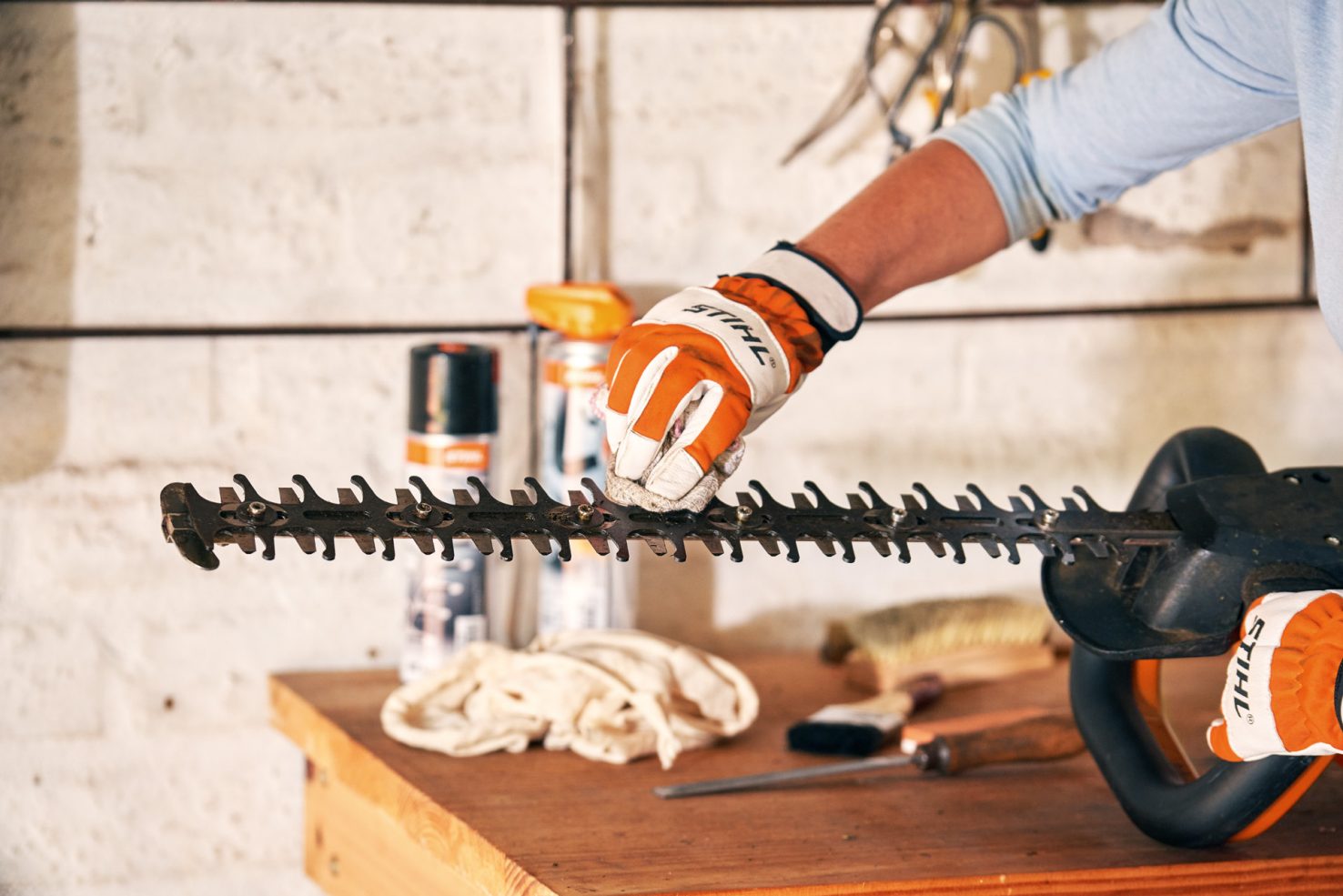
What You’ll Need to Sharpen Your Hedge Trimmer
- Flat file
- Whetstone
- Soft cloth and water
- STIHL Superclean resin solvent
- Safety glasses or face protection
- Work gloves made from robust material
Ideally, sharpen the blades before visible wear appears — as soon as you notice reduced cutting performance or frequent snagging on branches.
Preparation and Safety
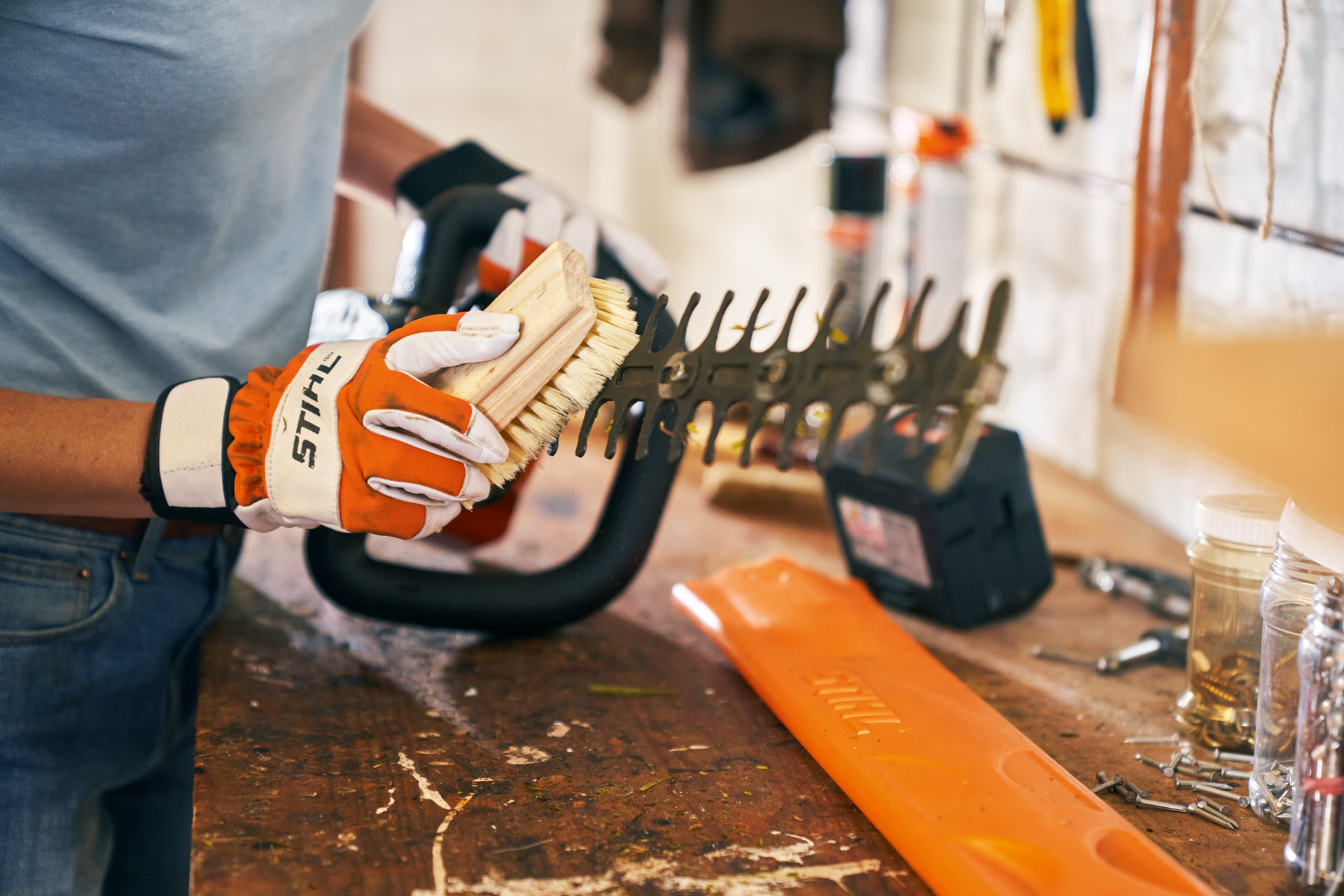
Before sharpening, clean the blades and make sure your hedge trimmer is safely disabled:
- Unplug the power cord, remove the battery, or disconnect the spark plug.
- Ensure the trimmer is stable on a flat surface or secured in a vice.
- Wear gloves and safety glasses to protect your hands and eyes.
Remove sap and resin with a soft cloth and STIHL Superclean to prevent dirt from dulling the file.
How to Sharpen Your Hedge Trimmer Blades
Follow these steps carefully to sharpen your hedge trimmer effectively and safely:
- Always file towards the cutting edge using smooth, even strokes.
- Use the correct sharpening angle as stated in your tool’s operating instructions.
- The file only works on the forward stroke — lift it away on the return to avoid dulling.
- Do not remove more than 5 mm of material; excessive filing can weaken the blade.
- Apply an equal number of strokes per tooth to keep all blades uniform.
- Only sharpen the cutting edges — do not file the cut protection.

Removing Burrs and Finishing the Edge
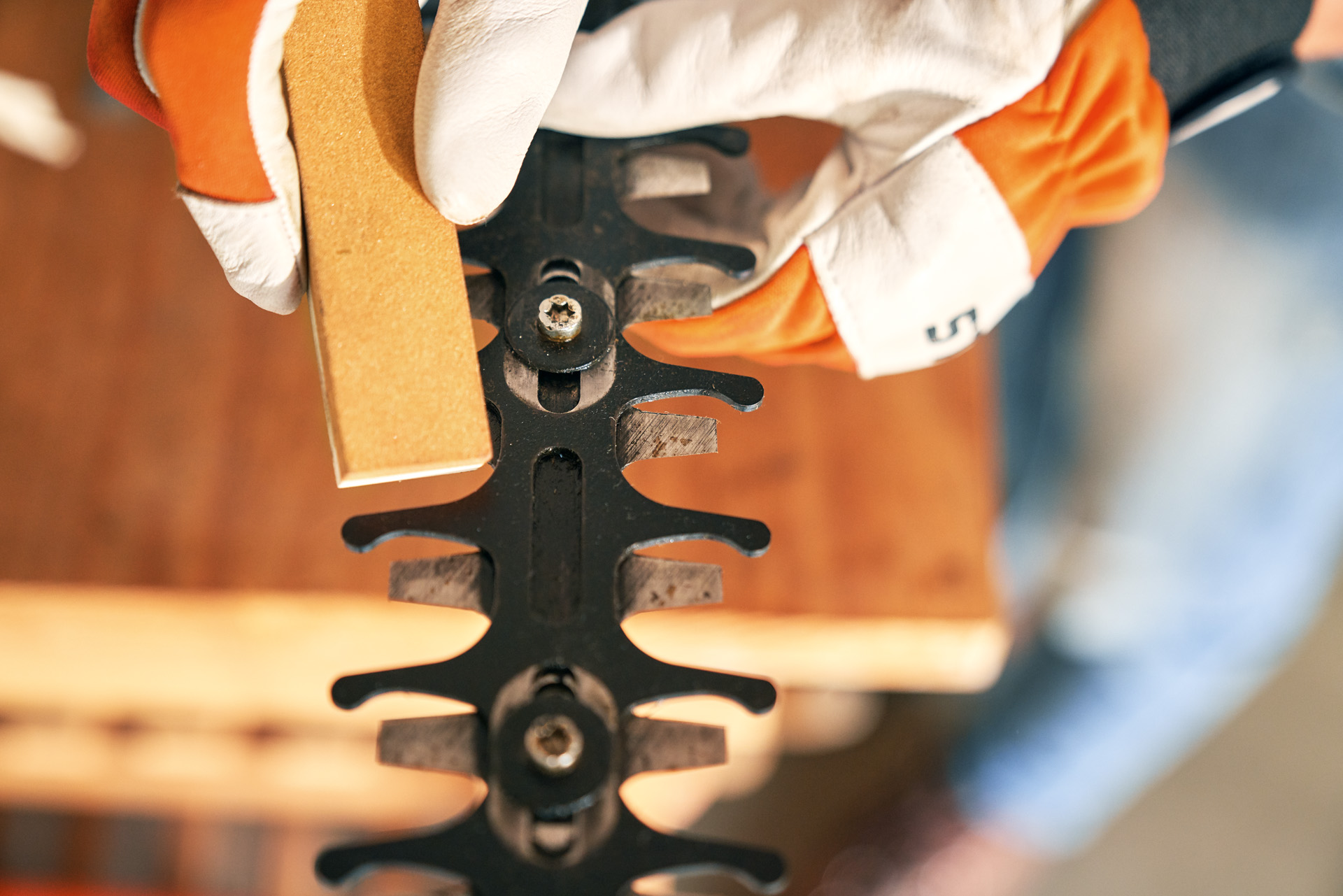
After filing, use a whetstone to smooth any burrs that formed on the underside of the blades. Lightly moisten the blade and move the whetstone carefully toward the tip with steady strokes.
This finishing step ensures clean, even edges and prevents tearing when cutting soft branches.
Protecting the Blades After Sharpening
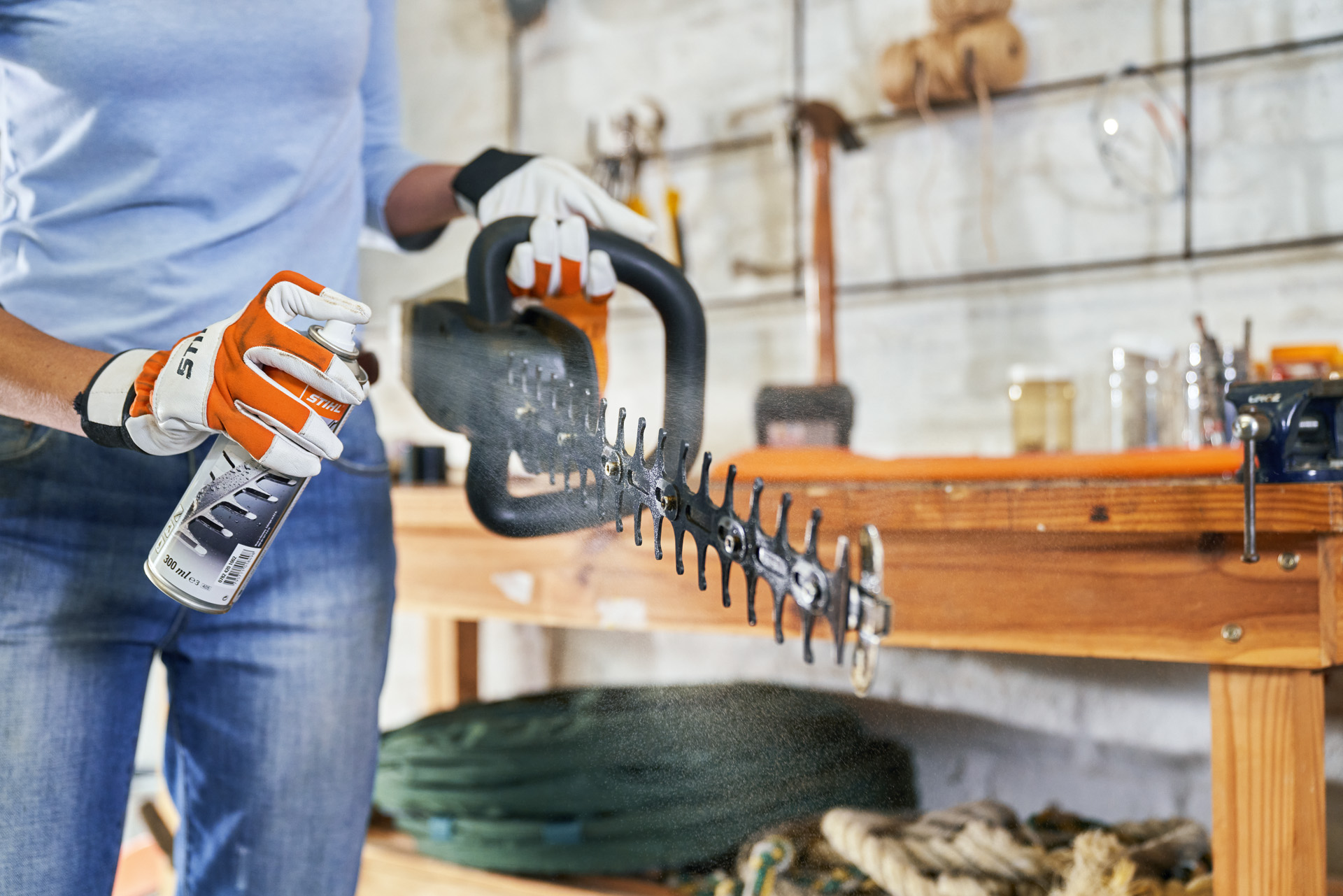
Once sharpening is complete, remove any grinding dust with a soft cloth. Spray the cutting attachment with STIHL Superclean resin solvent to restore corrosion protection and reduce friction.
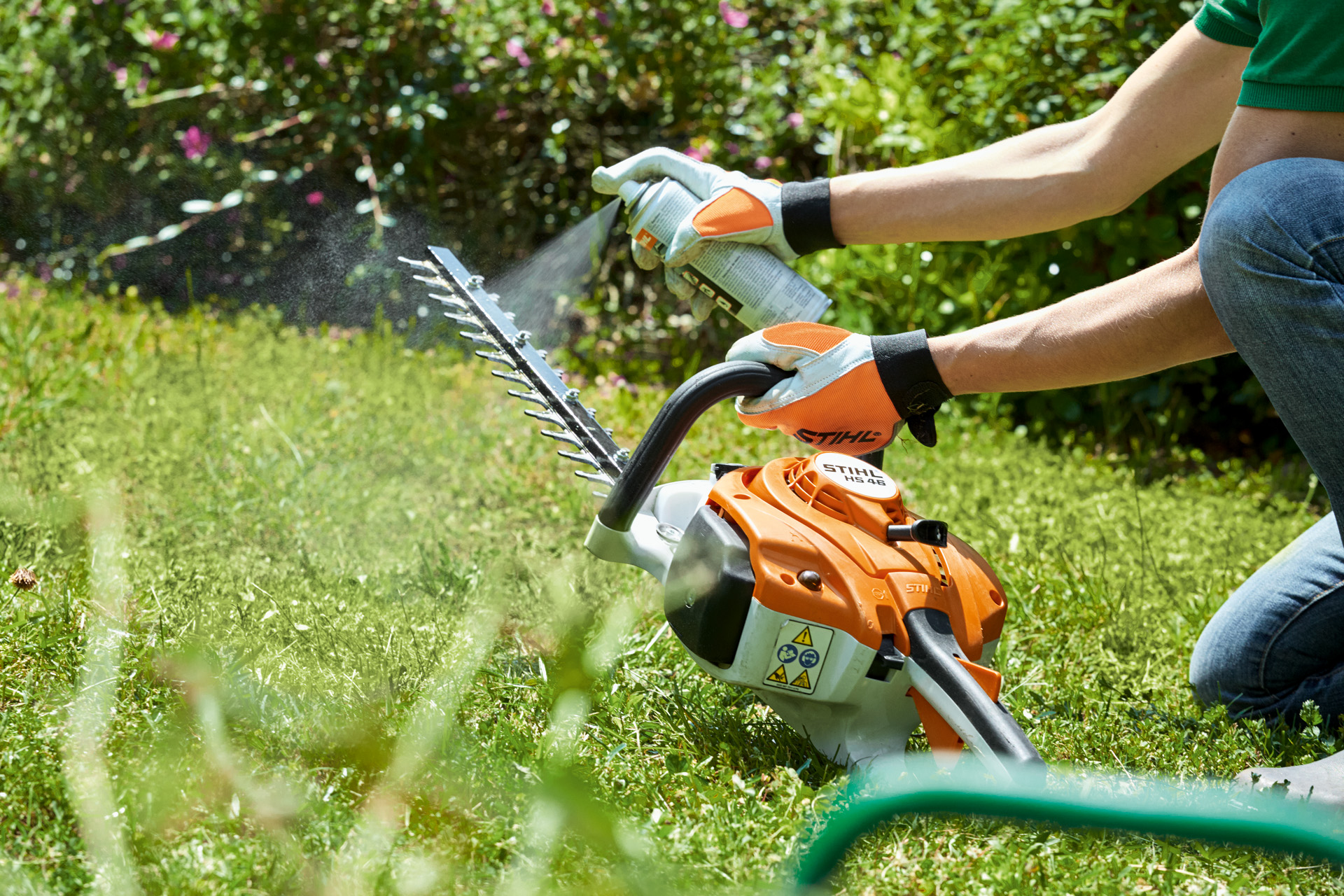 Shop STIHL Superclean Resin Solvent
Video: How to Sharpen a Hedge Trimmer
Caption for the first video
Caption for the second video
When to Ask a Professional
If you’re unsure about sharpening your hedge trimmer yourself, or suspect mechanical issues beyond dull blades, take it to a STIHL Approved Dealer. They can assess, sharpen, and balance the blades professionally to ensure safe operation.
Summary: Sharpening Hedge Trimmers
- Sharpen your hedge trimmer when cutting performance declines.
- Clean blades before sharpening and moisten them for burr removal.
- Use a flat file for sharpening and a whetstone to remove burrs.
- Apply STIHL resin solvent to protect and lubricate blades after sharpening.
- If unsure, have your blades sharpened by a STIHL professional.
Recommended STIHL Blade-Sharpening Tools

STIHL 2-in-1 EasyFile
Multi-angle sharpener built for hedge-trimmer blades — filing and smoothing in one tool.
View Product
STIHL Sharpening Stone & Whetstone
Finishing stone set to remove burrs and polish your hedge-trimmer blades post-filing.
View Product
STIHL Filing Kit 1/4″
Compact file kit designed for precise sharpening of cutting edges on hedge-trimmer blades.
View Product
STIHL 3-in-1 Sharpening Tool
Premium professional-grade tool for comprehensive edge maintenance and blade longevity.
View Product