


Why Your Hedge Trimmer Needs Regular Maintenance
Regular hedge trimmer maintenance improves performance, prevents damage, and keeps your equipment safe to use all year round.
Why Maintenance Matters
Each time you use your hedge trimmer, it experiences wear and tear that can affect its performance over time. Routine maintenance helps detect early signs of damage, prevents costly repairs, and ensures your tool operates safely.
A well-maintained hedge trimmer not only performs better but also reduces the risk of accidents caused by faulty or worn-out parts. Periodic inspection keeps your machine in excellent working condition and extends its lifespan.

How to Maintain Your Hedge Trimmer Correctly
Whether petrol, electric, or cordless, there are key maintenance steps to follow before and after every use:
- Wear PPE: Always use sturdy, resilient gloves when maintaining your hedge trimmer.
- Visual Check: Inspect the entire tool for fuel leaks, cracks, or damage to the housing and handles.
- Anti-vibration Elements: Ensure they are intact and functioning properly.
- Cooling Air Inlets: Remove debris to prevent overheating.
- Blades: Inspect for dullness, damage, or looseness; sharpen or replace as needed.
- Functions: Check switch lever, trigger, locking lever, and retaining latch for proper operation.
Clean the machine thoroughly with a damp cloth, paying attention to the cutting attachment. Apply STIHL care oil or maintenance spray to both sides of the blades, then run the trimmer briefly to distribute the oil evenly.
If needed, visit your STIHL dealer for gear unit servicing and Multilub application.
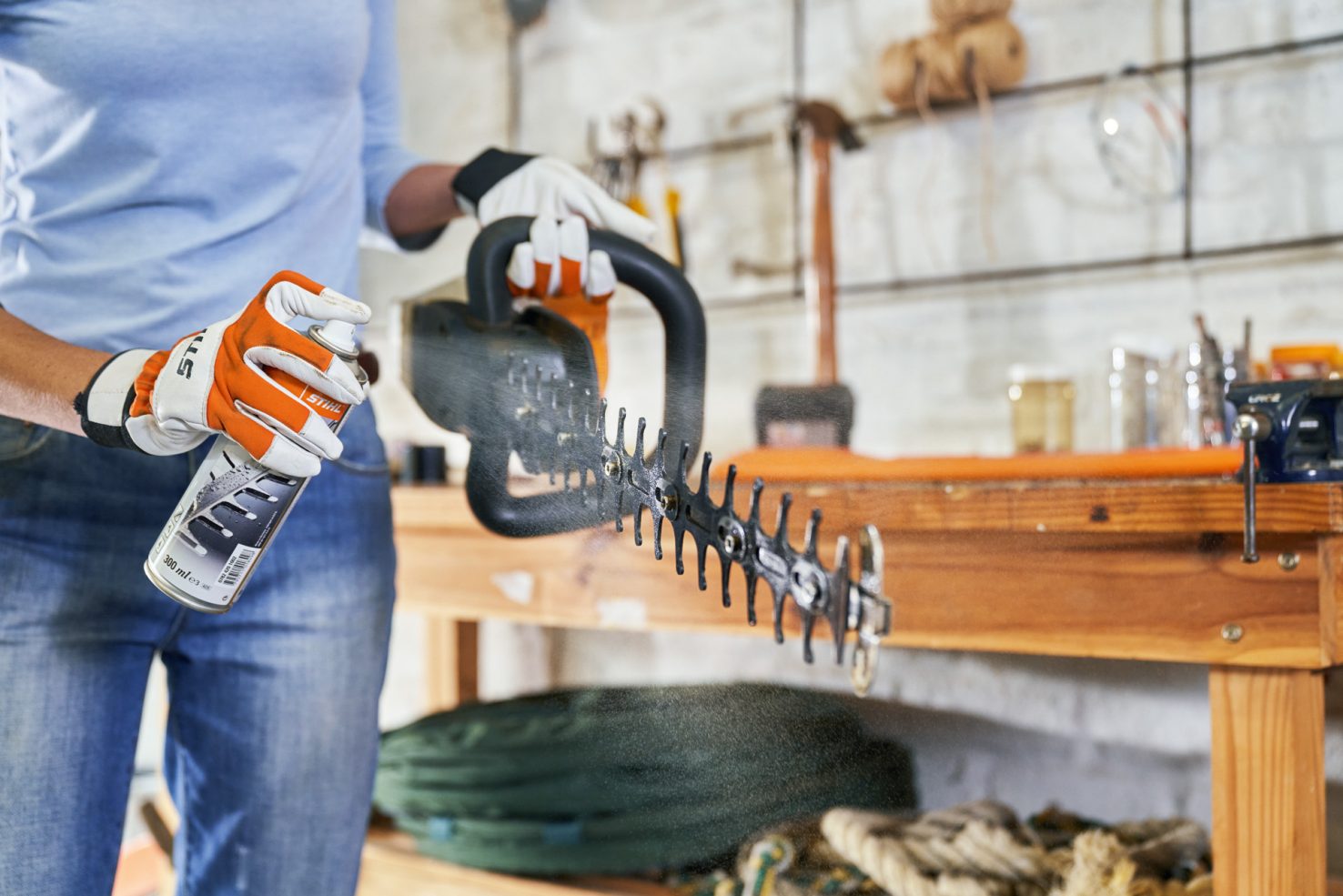 Shop STIHL Superclean Resin Solvent
Petrol Hedge Trimmer Maintenance
Keep your petrol-driven hedge trimmer in perfect order with these additional checks:
- Ensure the carburettor is properly idling before performing maintenance.
- Inspect for fuel leaks and repair immediately if found.
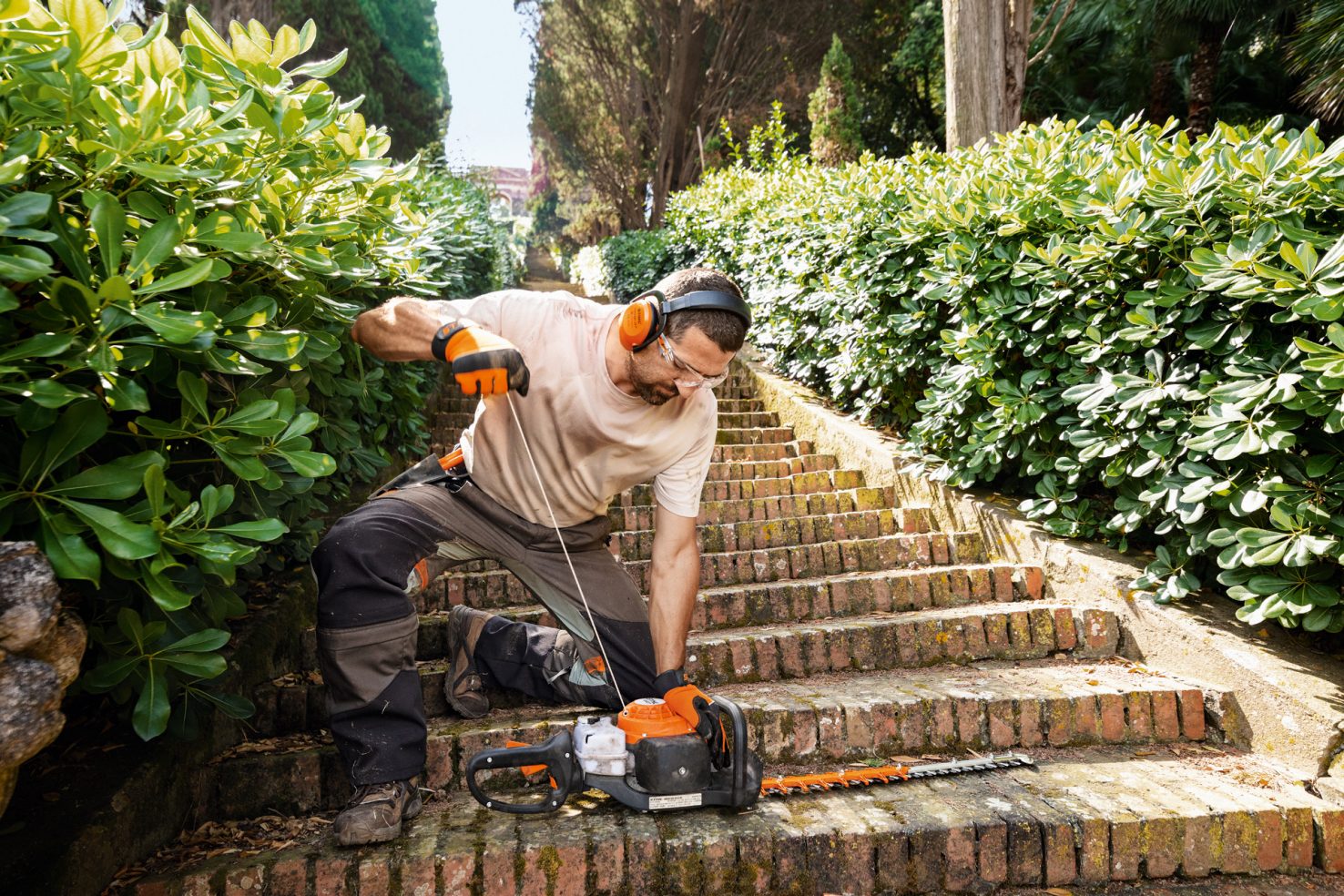
- Check and replace spark plugs approximately every 100 operating hours.
- Clean or replace the air filter regularly to prevent engine strain.
- Empty and clean the fuel tank if not using the tool for over three months.
- Have the pickup body in the tank replaced annually by a STIHL dealer.
Cordless Hedge Trimmer Maintenance
Battery-powered hedge trimmers require battery and charger care in addition to blade maintenance:
- Check that the LED indicators operate correctly. Red or inactive LEDs may signal a maintenance issue.
- After use, remove the battery and clean it gently with a damp cloth. Dry completely before storage.
- Store the battery separately from the trimmer, charged to around 40-60% (two green LEDs).
- Inspect the charger and electrical contacts regularly for dust or debris.
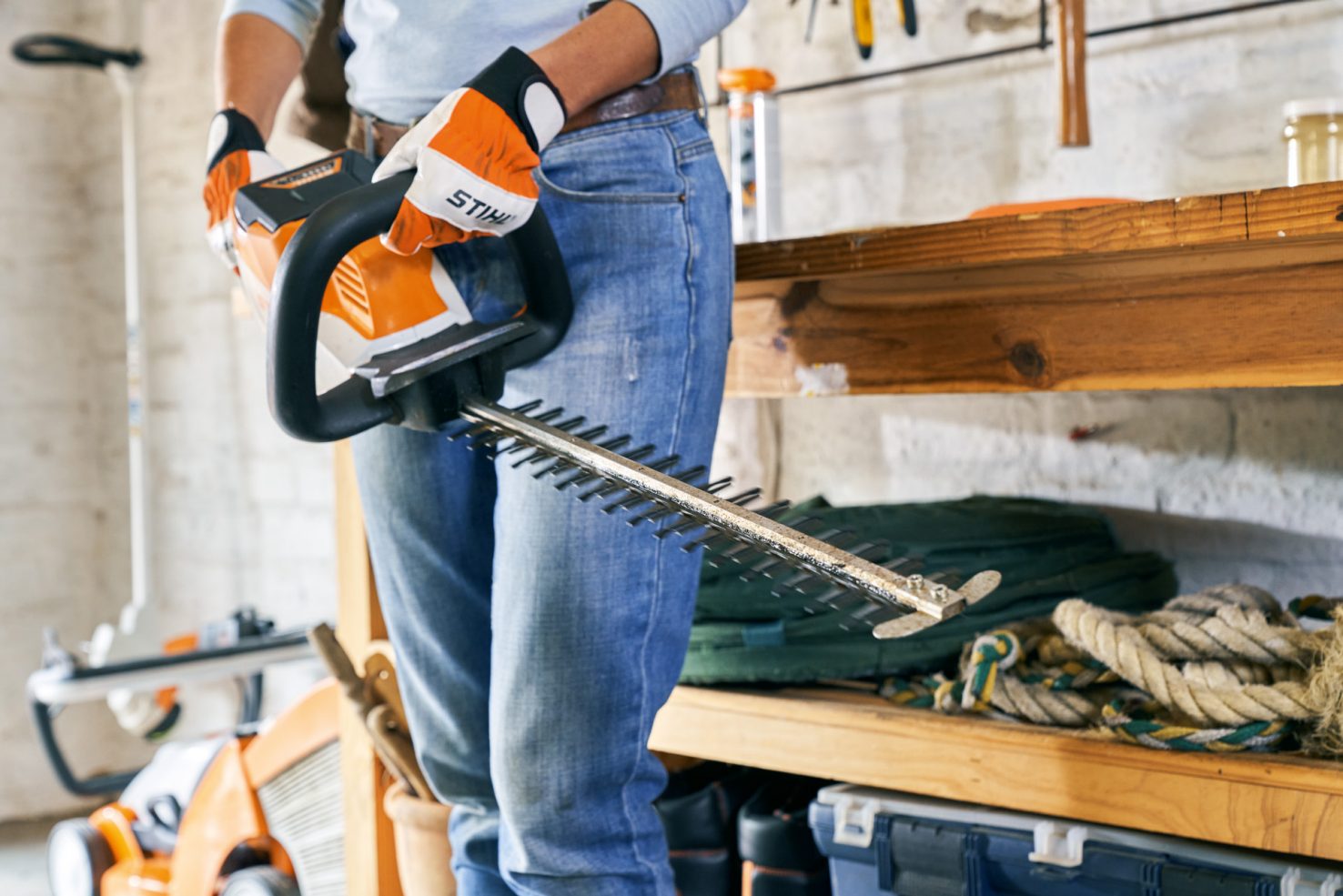
Lubricating the gears of a STIHL petrol hedge trimmer
Cleaning the air filter of a STIHL petrol hedge trimmer
Electric Hedge Trimmer Maintenance
For electric models, always disconnect the plug before maintenance to avoid serious injury. Perform these safety checks each time you use your trimmer:
- Inspect the power cable and plug for wear or exposed wiring.
- Stop using the trimmer immediately if insulation damage or cracks are visible.
- Only a qualified electrician should replace or repair electrical components.
- Have carbon brushes inspected by a dealer every 100 hours.
- The gear unit and connecting rod should be checked after 50 hours of operation.
Maintenance Products and Lubricants
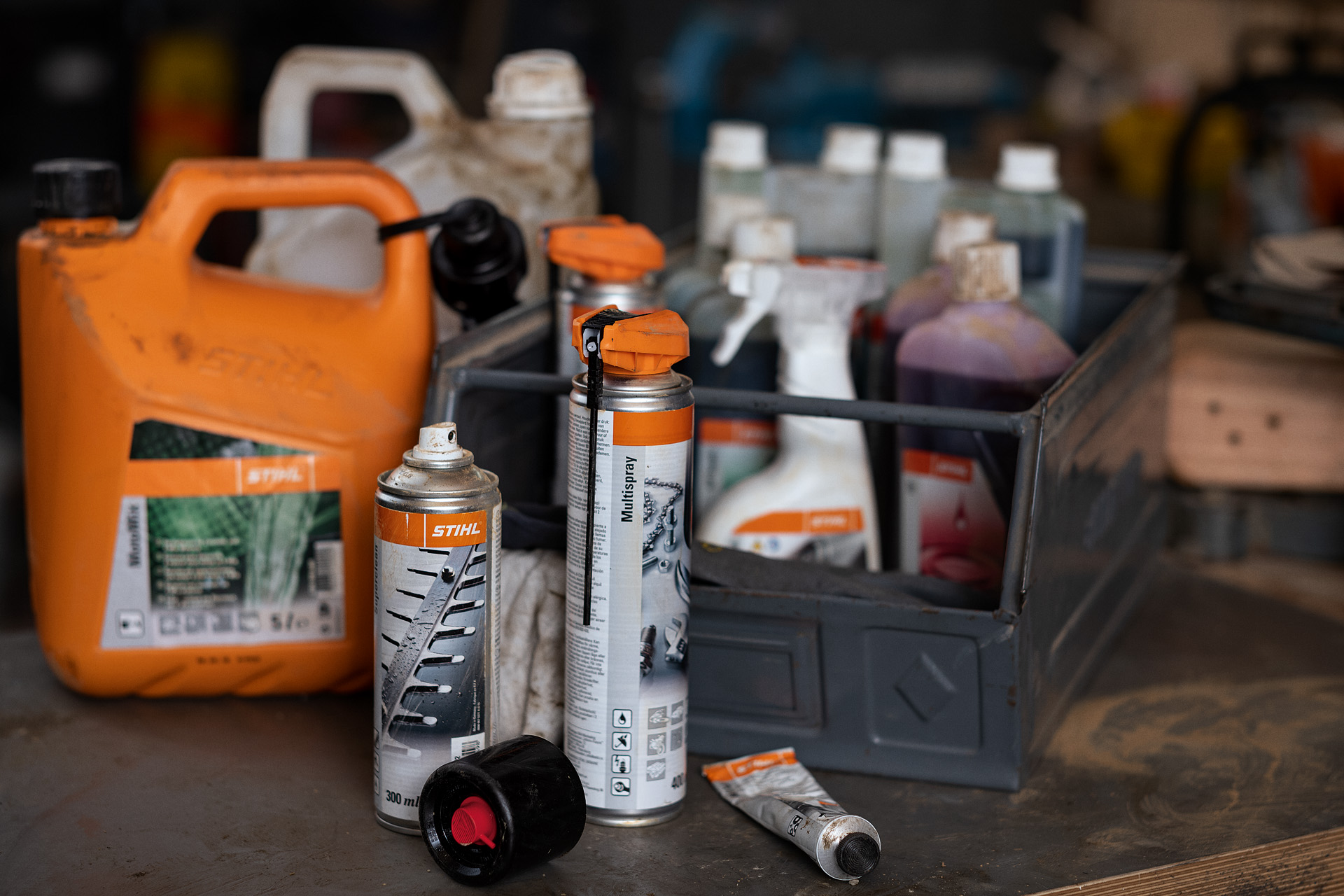
Each use exposes your hedge trimmer to resin, sap, and moisture. Regular use of STIHL maintenance products ensures smooth function and long-term protection:
- STIHL Superclean Resin Solvent: Cleans and protects blades against rust and sap.
- STIHL Multilub: Long-lasting grease for gear units.
- STIHL Varioclean: Special cleaner for removing oil residue and plant deposits.
Summary: Hedge Trimmer Maintenance
- Routine maintenance extends service life and ensures safe operation.
- Perform a visual check before and after each use.
- Clean, lubricate, and tighten all accessible screws regularly.
- Service the gear unit and replace worn parts through your STIHL dealer.
- Disconnect or remove power sources before any maintenance work.
- Keep batteries charged to 40-60% and stored separately.


