


Top Picks
Buyer's Guide
Arborist Ascenders & Descenders Buyer's Guide
From foot and knee ascenders for SRT tree climbing to chest rope grabs, Petzl RIG descenders and the ISC Reflex multi-function climbing device, this guide covers the full ascender and descender range at Gustharts to help arborists build a safe, efficient SRT climbing system.
Foot Ascenders
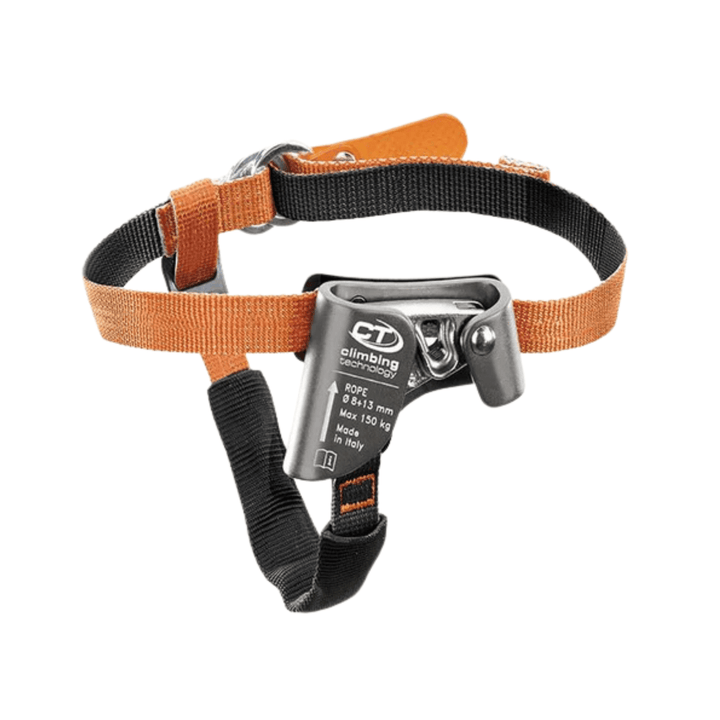
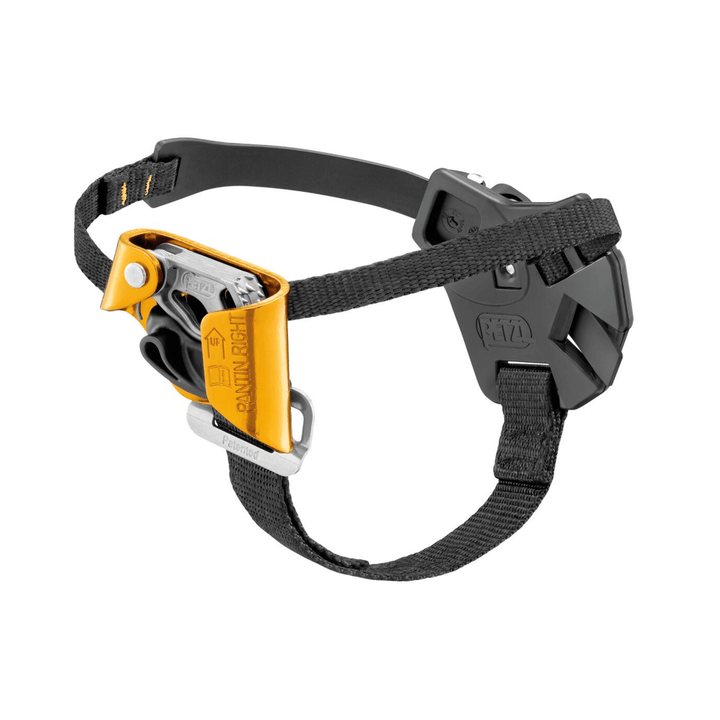
A foot ascender attaches to the climber's boot and grips the rope on the upstroke, converting leg drive into upward movement during SRT ascent. The Petzl Pantin is the most widely used foot ascender for arborist tree climbing - available in left and right foot versions. Foot ascenders are used alongside a handled ascender or chest ascender to create an efficient three-point SRT ascent system.
Knee Ascenders
A knee ascender straps to the climber's knee and grips the rope automatically during the knee-drive phase of SRT climbing, reducing arm fatigue and increasing ascent speed. The ISC Knee Ascender and Petzl knee ascender models are the most commonly used in UK arborist SRT setups. For tree climbing, a knee ascender combined with a foot ascender and a chest-mounted rope clamp forms the standard three-device SRT ascent system.
Chest Ascenders and Rope Grabs
A chest ascender - also called a rope grab or chest rope clamp - mounts at the sternum and holds the rope while the climber repositions their foot and knee ascenders. The Petzl Croll is the standard chest ascender for arborist SRT. Rope grabs are mechanical rope ascenders that grip the rope under load and release when unweighted - used for work positioning, belay backup and mechanical advantage systems as well as ascent.
Descenders and Lowering Devices
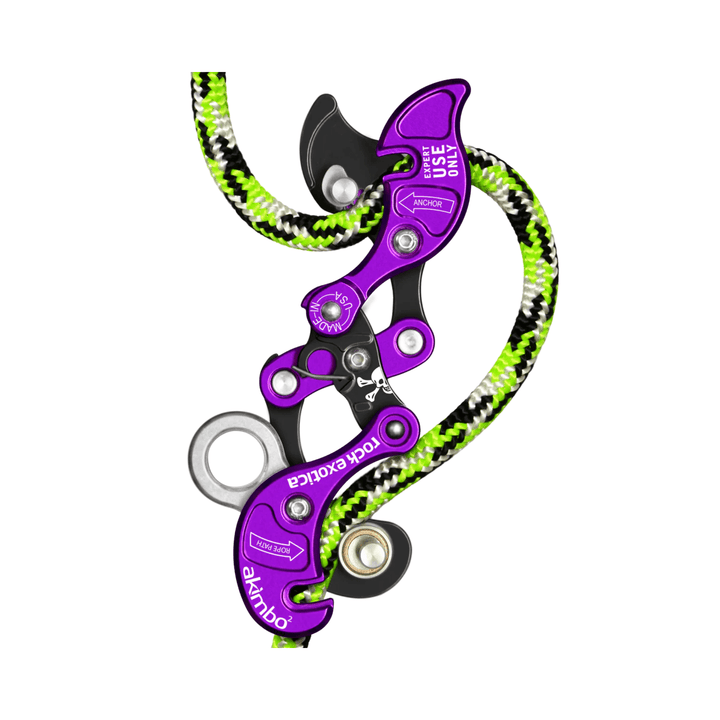
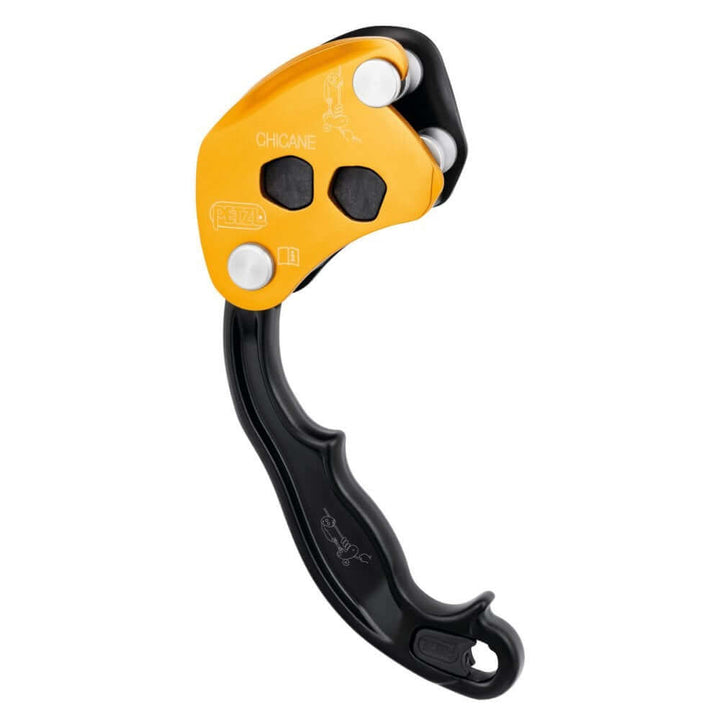
Descenders control speed of descent on a climbing rope. The Petzl RIG is a self-braking descender widely used by arborists for controlled descent from the canopy - the cam automatically locks the rope when the climber releases hand pressure. The ISC D4 and Rock Exotica Torc are alternatives offering similar self-braking function. All descenders must be compatible with the rope diameter in use - check manufacturer specifications before purchasing.
ISC Reflex and Mechanical Climbing Devices
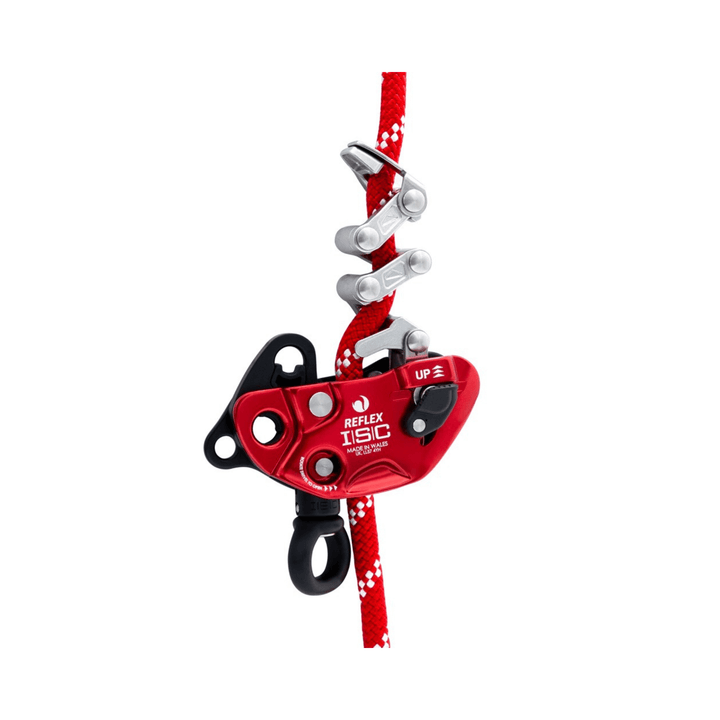
The ISC Reflex is a versatile mechanical climbing device used for SRT ascent, descent and work positioning in a single unit. It combines the function of an ascender and a descender with a handle-controlled descent mechanism, making it particularly popular for arborists who want a compact, multi-function climbing system. The ISC Reflex is available for 11mm and 12.5mm ropes and is compatible with the ISC and Petzl connector range.
SRT vs DRT - Which Ascenders Do You Need?
SRT (Single Rope Technique) climbing uses mechanical ascenders to climb a single fixed rope - requiring foot, knee and chest ascenders plus a descender for the full system. DRT (Double Rope Technique) does not use mechanical ascenders in the same way - progress is made through friction hitches and the rope running through the anchor. If you are transitioning from DRT to SRT, a foot ascender, knee ascender and Petzl Croll chest ascender form the standard starting point.
Ascender Compatibility and Rope Diameter
All mechanical ascenders are rated for a specific rope diameter range - most arborist ascenders suit 10mm to 13mm rope. Using an ascender outside its rated rope diameter range can result in slippage under load or damage to the rope sheath. Always verify the rope diameter compatibility before purchasing a new ascender or descender. Gustharts can advise on compatibility between specific ascenders and rope models - contact the team with your rope spec for confirmation.
Pairs Well With
- Tree Climbing Ropes — SRT and DRT lines from Teufelberger and Courant
- Climbing Harness Accessories — saddles and SRT chest harnesses
- Friction Devices — Prusik cords and mechanical friction hitches
- Tree Climbing Kits — complete SRT and DRT starter systems
- Carabiners & Connectors — certified connectors for climbing systems