

Buyer's Guide
Hedge Shears Buyer's Guide
Hedge shears trade the precision of secateurs for reach and speed across a longer cutting line. This guide covers blade length, handle style and how to pick between the Okatsune and STIHL ranges depending on how often you're shearing.
Blade Length: Precision vs Speed
Shorter blades (Okatsune 216, 217, 231) give more control for detailed topiary and shaping work where accuracy matters more than covering ground quickly. Longer blades (Okatsune 230, 214) cut a wider bite per pass, making faster work of a long hedge face at the cost of some precision. Pick short for detail work, long for volume.
Handle Style & Weight for All-Day Use
Hedge shears are swung repeatedly rather than squeezed once like secateurs, so weight and balance matter more over a full session. STIHL's PH 10 uses a traditional wooden handle for a lighter overall feel and better shock absorption on each cut, while Okatsune's range trades some of that for a more rigid, precise blade action. Neither is wrong — it's a question of whether you value a lighter swing or a stiffer cut.
Choosing a Model: Okatsune vs STIHL
Okatsune's numbered range covers most blade lengths and weights professionals ask for, with the 205 and 205-K among the most popular for general hedge work. The STIHL PH 10 is a simpler, lighter option better suited to occasional or domestic use rather than daily professional cutting. If you're shearing hedges regularly, the Okatsune range is worth the step up.
Keeping Shears Sharp
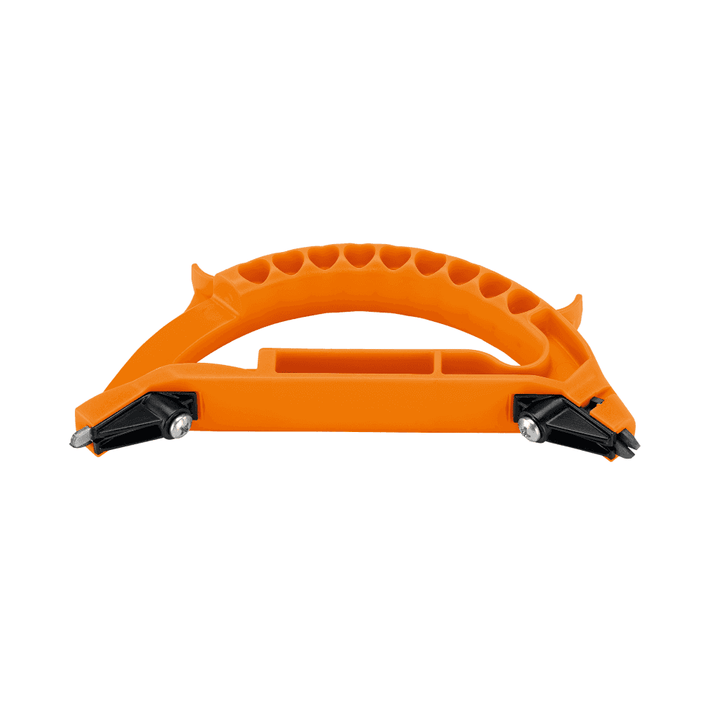
Hedge shears dull faster than secateurs simply from the volume of material passing through the blade, and a blunt pair tears foliage rather than cutting it cleanly — visible as browning leaf edges on a finished hedge. A sharpening stone or file brings the edge back; check our Sharpening Files & Stones range for options matched to a longer hedge shear blade rather than a secateur-sized one.
Pairs Well With
Complete Your Kit